12. Hypnosis and Will in the Clinical Context
Written on September 4, 2026
In a later post, I hope to present some ideas about the future of clinical hypnosis, at least in the UK. But I have yet to address the matter of 'hypnosis and will' in the clinical context.
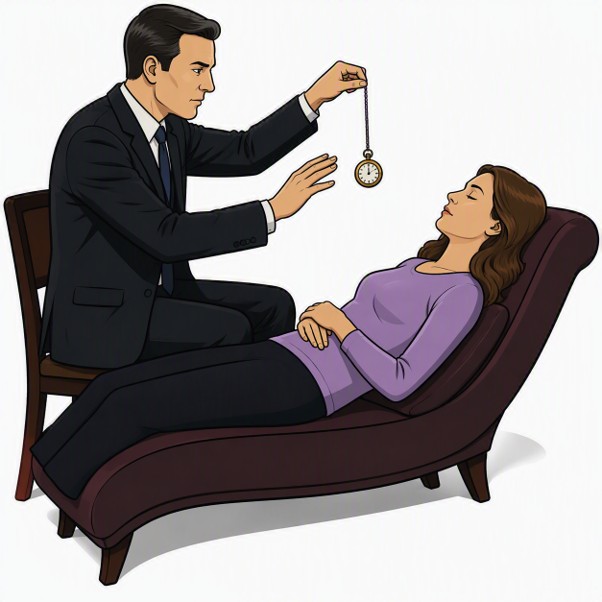
Most of the legal cases for which I have provided expert opinion concerning hypnosis are those in which the complainant alleges that she or he has been indecently assaulted during a session of hypnosis, relaxation, guided fantasy or similar procedure. The most common scenario is where a therapist (in my experience it has always been a male) is treating a client or patient (usually female) with hypnosis. Following one session of hypnosis the patient reports to the police that while she was hypnotised the therapist behaved in an indecent manner. She did not resist at the time or say anything to him afterwards.
Very often, there are one or more variations on this basic case. First, the context does not have to be clinical or therapeutic: another setting may be a psychological laboratory or a training course. Second, the complaint may be made some time after the alleged assault - even years. Third, the complainant may have returned for further appointments following the session in which an assault is claimed to have occurred. Finally, the alleged assault or assaults may be limited to stroking and fondling of sexual parts over the clothing, or may extend to such activities as masturbation, oral sex and full intercourse, in which the complainant may play a more active part.
It is my experience that the role of the expert witness largely entails examining the claimant's allegations and providing advice to the court as to their credibility. Is she likely to have made up her story or could it be that her being hypnotised made her more predisposed to fantasise or misinterpret the hypnotist's actions? Often the issue of consent is raised: Why did she not take action to protect herself or call a halt to the proceedings? Could her being hypnotised explain this? Similarly, why (in some cases) did she seemingly willingly participate in the alleged sexual activity and even attend her next appointment(s)? Why did she wait so long before making her allegations (to others and to the police)?
The evidence to be examined is largely documentary (the complainant's and defendant's statements, transcripts of police interviews, medical records, other witness statements, and so on). I have always found the complainants' accounts at their police interviews and their subsequent statements to be the most revealing. Indeed, it is the expert's prime duty to advise the court on the reliability of such evidence, not on its veracity one way or the other.
I have written several papers reviewing the learned literature and my own work involving cases such as these, which can be quite complex, and these papers are referenced on my website. Here I shall simply summarise my observations. As I have insisted in my previous posts, where there is an unusual degree of compliance on the hypnotic subject's part, this can be well-accounted for by considering the context in which these events are taking place. This applies in the overwhelming majority of cases I have been involved with and those reported in the literature. Typically, the complainants do not describe themselves as 'being hypnotised'; rather their experience is one of great fear, uncertainty and confusion. Their accounts compare closely with those of complainants in similar contexts in which hypnosis has not been used, where a trusted person in authority has made unwelcome sexual advances.
Despite this, it may well be that the procedural aspects of hypnosis (and similar methods) render the patient more vulnerable to sexual exploitation by the practitioner. The patient is seated or lying down, with her eyes closed. By agreement, the hypnotist tends to direct her behaviour and experiences, and she is expected to go along with his instructions. She is usually unfamiliar with the procedures and may therefore have an unclear idea about what behaviour on the hypnotist's part is legitimate or otherwise. This especially applies to the issue of physical contact: some therapists use massage or stroking, and occasionally hypnosis is used to facilitate a medical procedure that requires direct physical contact between the practitioner and the patient.
What have been the outcomes of those cases I have worked on that have come to trial? Not all of them have got that far for various reasons, and I can't recall a guilty plea. Some defendants have been found guilty and others acquitted. Of the latter, my view is that in some of these cases the verdict was justified, but questionable in others.
Next time: My ideas on the future of clinical and therapeutic hypnosis in the UK.
Note: At present, it's not possible for you to post your comments on my blog directly. But I welcome them via my email address, and I'll only upload them under 'Comments' if that is your wish (and with the usual stipulations about offensiveness, etc.)